Traditional Chinese Medicine and Ceramics
Sky Wentian He
Palo Alto High School, Palo Alto, California
Angelina Wang
Flintridge Preparatory School, La Cañada Flintridge, California
The Chinese traditional herb shop traces its roots back to 1972, when it was officially founded, though its history stretches further. The family behind it has run the business for four generations, making it the oldest shop of its kind in the area. Over the decades, it has expanded to 20 stores, and if one shop does not have a particular product, another branch usually can provide it. The family also notes that as early as 1851, missionaries had already introduced herbal products such as tea and perfume to America.
The customer base today is primarily Chinese, but around 20 percent are foreigners—including Caucasian, Black, and other non-Chinese groups. Roughly half of the clientele are local residents, while the rest include tourists from China and Europe. The shop emphasizes eco-friendly practices, reusing food cardboard boxes for packaging and recycling broken ones. Their philosophy centers on natural remedies: they avoid using lab-grown plants, and many of their products, such as Wisconsin-grown ginseng, are sourced carefully.
Animal-based products cannot be brought into the U.S. due to endangered species protections, and regulations pose a constant challenge. Herbal medicines usually do not expire, and in fact, older stock is often considered more potent. Still, if a product spoils, it is discarded. Customers find these remedies more affordable than American pharmaceutical alternatives, though government scrutiny—especially from the FDA and USDA—remains an obstacle. When a product proves particularly effective, regulators tend to investigate more closely.
COVID-19 reshaped the business but, in contrast to many industries, demand actually grew. With fewer tourists, local customers drove sales, and phone orders with shipping allowed the shop to keep serving clients. The pandemic reinforced trust in herbal remedies, which many people turned to as an alternative form of protection. Despite competition from hospitals’ acupuncture and herbal divisions—which often look down on the shop—this family business has remained resilient, balancing tradition with the pressures of modern regulation.
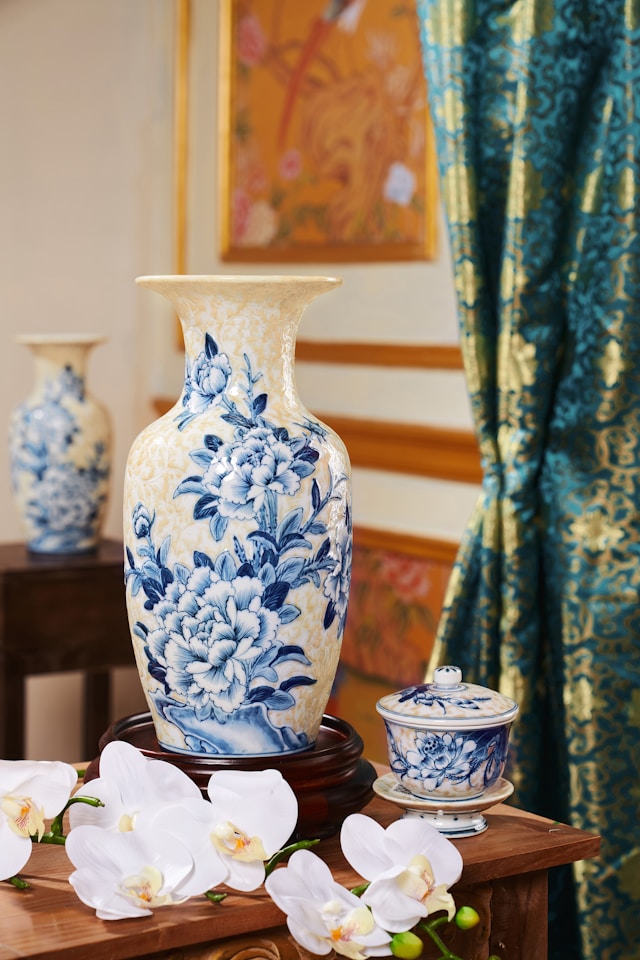
The Jingdezhen ceramics boutique and exhibition is another business that reflects the challenges of balancing tradition with modern realities. It specializes in ceramics from Jingdezhen, a city long celebrated as the heart of Chinese porcelain. For the shop, business remains legal and unrestricted as long as it complies with regulations.
Tourism is the lifeblood of this boutique. About 90 percent of its customers are tourists, and after three in the afternoon, most visitors are foreigners. To meet demand, the shop packages its goods in traditional tin containers but also offers plastic packaging as a cheaper option.
The business environment, however, has grown tougher. The costs of goods have risen dramatically, and tariffs have fluctuated sharply due to Trump’s tariff war against China—from 10 percent to 145 percent at their peak, before dropping to 36 percent. These increases forced the shop to raise its prices, meaning customers ultimately bore the burden. COVID-19 further strained the business, as reduced travel cut deeply into the tourist flow on which it depends.
Despite these challenges, the boutique continues to showcase Jingdezhen ceramics, striving to preserve cultural artistry while navigating the financial pressures of a global market.