Mirror, Mirror on the Wall
Aien Du
St. John’s School, Houston, Texas
The essay argues that English, rooted in colonization and white supremacy, forces minorities to conform by speaking “perfect English,” erasing parts of their identity. Mimicry—whether in speech, culture, or behavior—offers temporary safety, as shown in works by Cathy Park Hong, Franny Choi, and Ken Liu, but it ultimately leads to self-loss and alienation. True assimilation remains impossible, illustrated by The Great Gatsby and Choi’s mother, because society’s prejudice creates boundaries that cannot be crossed. Forced imitation also dehumanizes, stripping individuals of authenticity and reducing them to stereotypes, as seen in Tim O’Brien’s The Things They Carried. The essay concludes that resistance must come through play—a creative act that reclaims language and identity, turning shame into pride. Only by embracing difference rather than erasing it can society allow marginalized voices to exist fully and authentically.
Historically, English has been the language of colonization, consumerism, and white supremacy. Even though it’s one of the simplest, flattest languages to learn, English is a symbol of superiority and exclusivity on the global stage. If power were determined by intricacy and nuance, English would not compare to the hundreds of more complex, beautiful dialects. Nevertheless, English accomplishes its oppression by attaching negative social implications to those who cannot speak “perfect English.” Speaking “perfect English” requires compliance. When minorities speak English from their native tongues, they not only flatten their tone and accents, but also their identities as they try to conform. Minorities who grew up speaking languages with twenty or more tones—languages rich with history, precision, and complexity—must “prove” they can master English, while native speakers stumble through grammar mistakes and call it “natural.” Americans move freely, treating others’ homelands like playgrounds, while the true natives are expected to imitate, to mimic, erasing parts of themselves for an illusion of acceptance. In order for individuals to win the “imitation game,” they cannot mimic as it leads to loss of identity and dehumanization. Instead, individuals must learn to use play as a form of resistance.
Individuals mimic to achieve a sense of security and belonging. In Bad English by Cathy Park Hong, the narrator quickly discovers that her “bad English” and unfamiliarity with Korean-American fashion and social codes makes her a “target” in her Korean Church group where she is ostracized and bullied. As she matures, she discovers that mimicry offers a haven of protection by allowing individuals like her father to become invisible to social hostility. Her father intentionally copies the emotional expressiveness of American culture. After observing an American salesman, he also begins saying “I love you” to family, customers, and strangers, hoping this would ensure societal assimilation (Hong). Hong herself mimics “autoritatativ[e]” and “soberingly fluen[t]” English to “dispel the derision” cast on her non-American family. The act of using mimicry as a method of survival is further explored in Franny Choi’s Imitation Games. Hoping to “move through American xenophobia unscathed,” Choi’s parents endure countless training to not just “speak English,” but to “perfect English” by copying phrases, accents, and intonations (Choi). They literally repeat certain phrases like “a dime a dozen” to inject a “flawless Midwesternese” identity into their mouths in order to protect themselves from “some danger [they] couldn’t quite name.” The idea of imitation used as a survival skill runs deep in the roots of Asian American households in the US, where individuals feel that if they are deviant from the norm they will be targeted. So they become compliant, knowing that “as long as [they] don’t cause trouble, as long as [their] labor is ‘skilled,’ as long as [they] don’t stand out,” they can escape racist persecution (Choi). Additionally, mimicry is often used as a way to falsely seek acceptance and belonging in American society. In The Paper Menagerie by Ken Liu, Jack mimics American culture because he yearns for belonging in his school. He quickly resents his Chinese, non-American mother and aggressively rejects their culture. He establishes a firm distinction between “his family” and “other families… who have a mom that belongs” (Liu 32). Jack, desperate to “fit in,” imitates everything about his white, “popular” friend Mark. He willingly sacrifices his Chinese culture in order to imitate American traditions; “American style” cooking replaces chopsticks, English overshadows Chinese, and “real” plastic, Obi-Wan Kenobi Star War toys replace his mother’s paper menagerie (33). For Jack, mimicry seems like the opportunity to seamlessly transition into the American culture which he perceives as superior. The desperation to achieve safety or belonging causes individuals like Hong’s father, Choi and her parents, and Jack to mimic American language and behavior.
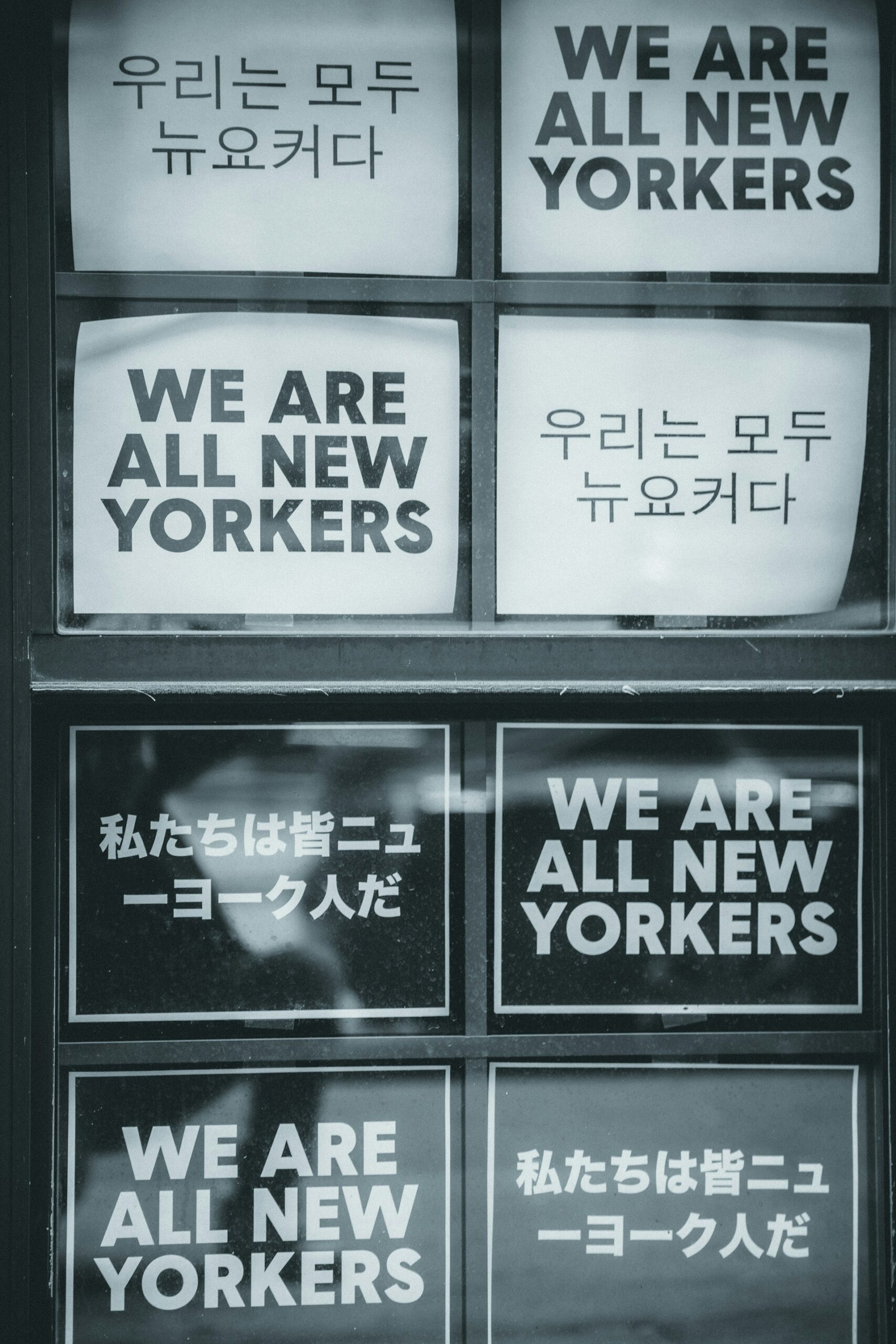

But no amount of mimicry or fluency can achieve full assimilation, because in the end, the plea for acceptance falls on deafened ears. Language, wealth, politeness—none of these can fully erase the preconceived notions people cling to. This unattainable exclusion extends beyond race, as seen in The Great Gatsby by F. Scott Fitzgerald, where Jay Gatsby’s socioeconomic status keeps him from ever truly belonging. Gatsby does everything to fit into the East Egg: he copies the “silk shirts,” expensive yellow Rolls-Royce cars, and even the “old money” lingo, yet Tom Buchanan and the rest of the East Egg society still dismiss him as a “common swindler,” and even worse, “Mr. Nobody from Nowhere” (Fitzgerald 130 and 133). Despite having reached insurmountable wealth and education, Gatsby is still looked at by society as if his old persona is sticking out from his costume. Fitzgerald uses Gatsby’s continuous attempts to show his fruitless dream of joining the East Egg. In Imitation Games, Choi describes this same hopeless grasp for belonging as a “skin suit.” This suit is purely external, offering little to no shelter from judging eyes. She sees Gatbsy’s situation in her immigrant mother who perfects her English and excessively smiles, yet still cannot secure a promotion because her accent marks her as deficient and perpetually “other.” The white co-workers complain that they “can’t understand [her], because of [her] pronunciation” (Choi). It shows that even despite the English classes and years of residence in America, her attempts to fit in will never result in true validation. But this unattainable equality is not a slight on the individual. It’s not Gatsby’s inadequacy or Choi’s mother’s incompetency; it’s society’s ignorance. In Bad English, Cathy Park Hong mentions how “bad English is a dying art” because of how unforgiving society is towards people they perceive as “other” (Hong). The term “bad English” is a symbol of diversity and difference, so by eliminating it, society continues to not “have time” to listen and understand. Belonging isn’t an individual failure—it’s the impossible boundaries society draws around who gets to be fully human and who isn’t.
This predetermination of belonging dehumanizes individuals trying to assimilate, forcing them to create an ingenuine version of themselves. The consistent mimicking destroys the unique, human aspects of their identity. In Imitation Games, Choi falls victim to this exact fragmentation. At Brown University, she finds herself excited to “finally be the real [her]–but it [i]sn’t always clear whether [she] was becoming her or just learning to impersonate her” (Choi). This ambiguity speaks to the lack of honesty and freedom in her experiences. By this time, her accent is just a patchwork of the different environments she has mimicked: the “y’all” from Georgia, “both” from Midwest, and “marry” from New England. Throughout her life, Choi mirrors people so much that her identity is lost beneath the different versions she mimics. The conceptual idea of “talk like yourself” is completely unfathomable–even “impossible” to Choi. Her comparison of a “skin suit” shows that she fears that beneath all the accents and adaptations, there might actually be no real self, “nothing underneath it at all.” Unlike Choi, Jack’s mother is conscious of the idea that her truest love and emotions can only be conveyed when she speaks Chinese, not when she copies English. When Jack demands her to “speak English,” she quietly resists, knowing that when she “say[s] ‘love,’” she feels it on “her lips,” but “if [she] say[s] ‘ai,‘” she feels it “over her heart” (Liu 33). Even so, she still attempts to mimic American mothers, giving him hugs and cooking American food, yet even these acts are seen as “exaggerated…ridiculous… graceless” (34). Forcing her to mimic American mothers turns her originally loving and graceful presence robotic and inhuman, compromising her identity. Imitation does not help her assimilate, instead, it “squeeze[s] the air of life out of” her (34). Mimicry, in The Things They Carried by Tim O’Brien, serves as a powerful tool for dehumanization, particularly in the way the American soldiers treat the Vietnamese civilians. Throughout the novel, the soldiers reduce an entire culture and people to mere caricatures of the enemy, referring to them collectively as “Viet Cong.” This dehumanization is evident when they classify an innocent animal that clearly does not have ties to Communism as a “VC water buffalo” (O’Brien 74). The labeling shows how entrenched this mindset is within the American soldiers. Even the referral of the land as the “Garden of Evil” demonstrates how the soldiers strip Vietnam of any complexity or humanity, casting it as a foreign, hostile environment that must be annihilated. When Ted Lavender dies, the men reenact some of his frequently said lines, honoring his memory. But those same men mock the death of a Vietnamese man, forcing a handshake—traditionally a gesture of respect—with the corpse as a weapon to dehumanize him. “They just grabbed the old man’s hand and offered a few words,” but their intentions “[were]n’t decent” (214-215). Their “polite” and “respect for elders” words were “more than a mockery” (215). They classified the Vietnamese people as so different that it allowed them to justify their violence and cruelty toward an entire culture they refuse to recognize as equal. O’Brien juxtaposes these two deaths and their contrasting “funeral” to show how white privilege leads to dehumanization of the “other” (215). For Choi, Jack’s mother, and the Vietnamese people, mimicry does not achieve belonging at all, in fact, it leaves them more removed and less human than they began with.

Mimicry, whether intentional or not, causes individuals to shape themselves off of something they see in the mirror. The brutal transformations cause them to lose focus of who they once were, but at the end of the day, there is only so much an individual can do to reverse the bias rooted in society. It’s a systemic flaw that populations can work together to uproot. Wiping out “bad English” erases people’s ability to genuinely and naturally exist as themselves. In order to truly overcome the “flattening” of other nations, languages, and people, society must allow space and time for difference, “adding depth to a city otherwise flattened by the oppressive sun” (Hong). By dimming the “oppressive sun[‘s]” light, society might actually get the opportunity to see the glowing, “incandescent” groups of people that were shining all along.
Works Cited
1. Choi, Franny. “Imitation Games.” Gulf Coast: A Journal of Literature and Fine Arts, vol. 34, no. 1, Winter/Spring 2022, gulfcoastmag.org.
2. Fitzgerald, F. Scott. The Great Gatsby. Scribner, 1925.
3. Hong, Cathy Park. “Bad English.” SweetStudy, https://www.sweetstudy.com/files/cathyparkhong-minorfeelingsbadenglish-pdf.
4. Liu, Ken. “The Paper Menagerie.” The Penguin Book of the Modern American Short Story, edited by John Freeman, Penguin Books, 2022, pp. 389-404.
5. O’Brien, Tim. The Things They Carried. Houghton Mifflin Harcourt, 1990.