Chinese Stars in Hollywood
Chris Li
Asheville School, North Carolina
Hollywood has long been one of the most influential centers of global entertainment, attracting performers from around the world. Chinese and Chinese-background actors have played an important role in shaping how Asian stories and identities are represented on screen.
This collection highlights Chinese stars who have made their mark in Hollywood through talent and persistence. Some are known for action films and martial arts, bringing a distinctive visual style to international cinema. Others have gained recognition in drama, comedy, science fiction, and independent films, demonstrating the diversity and depth of Chinese talent.
Their journeys have not been easy. Many have faced language barriers, stereotypes, and limited opportunities. Despite these challenges, they have helped expand representation and opened doors for future generations.
By exploring their careers and works, we can better understand their contributions to global cinema. This project celebrates their achievements, their challenges, and their lasting impact on audiences around the world.
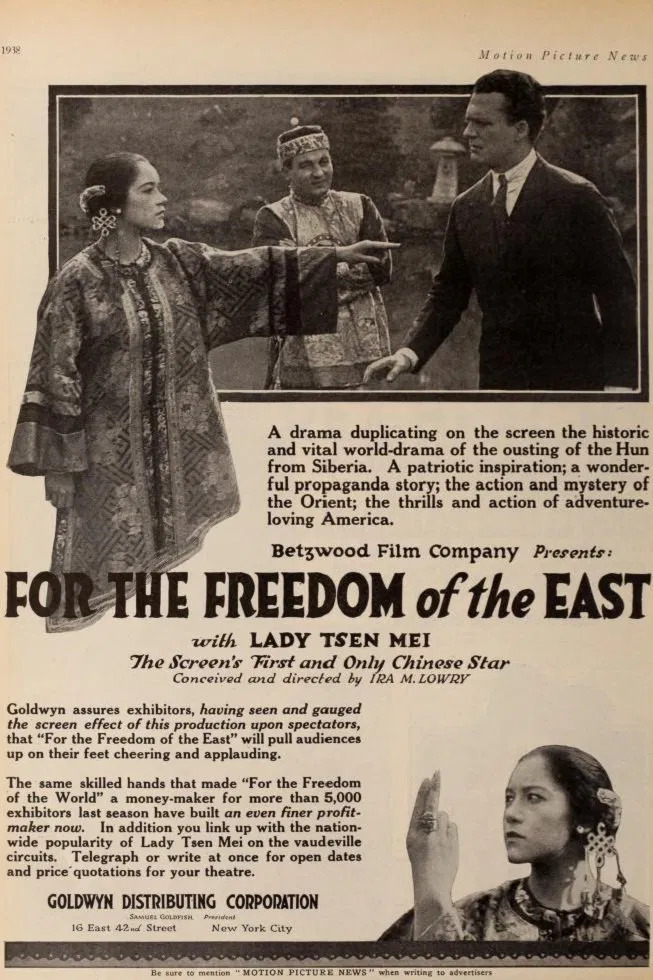
Lady Tsen Mei (1888 – 1985)
-For the Freedom of the East (1918)
During World War I, Princess Tsu (played by Lady Tsen Mei) is the leader of a secret Chinese society to fight German propaganda in her land. Franz von Richtman, head of the German spy system. Since her dedication to eradicating the German influence in China, she stole the Germans’ written agreement and smuggled it to American agent Robert Kenyon, with whom she had fallen in love. The princess’s jealous fiancé, Prince Kang, informed her that Robert had married an American woman. Driven by vengeance, she revealed to German agent von Richtermann that Robert possessed the secret documents. In Washington, Richtman dispatched his henchmen to arrest Robert before he could contact the Secretary of State. Yet Princess Tsu’s devotion to her nation overrode her personal anguish, and she thwarted the plot. Realizing her enduring love for Prince Kang, she returned to China and married him.
This movie is very important since it was one of Hollywood’s first attempts to cast Chinese performers in parts that weren’t based on stereotypes. Also, Lady Tsen Mei’s role in the movie wasn’t just a one-dimensional lady; she was a woman who was making choices and decisions in the middle of power struggles and fighting for her country’s and her own freedom. During a time when white actors often put on yellowface paint to play Asian characters, Tsen Mei’s primary role in For the Freedom of the East broke racial casting rules. This pioneered the way for more accurate portrayals of Asians in early Hollywood movies.
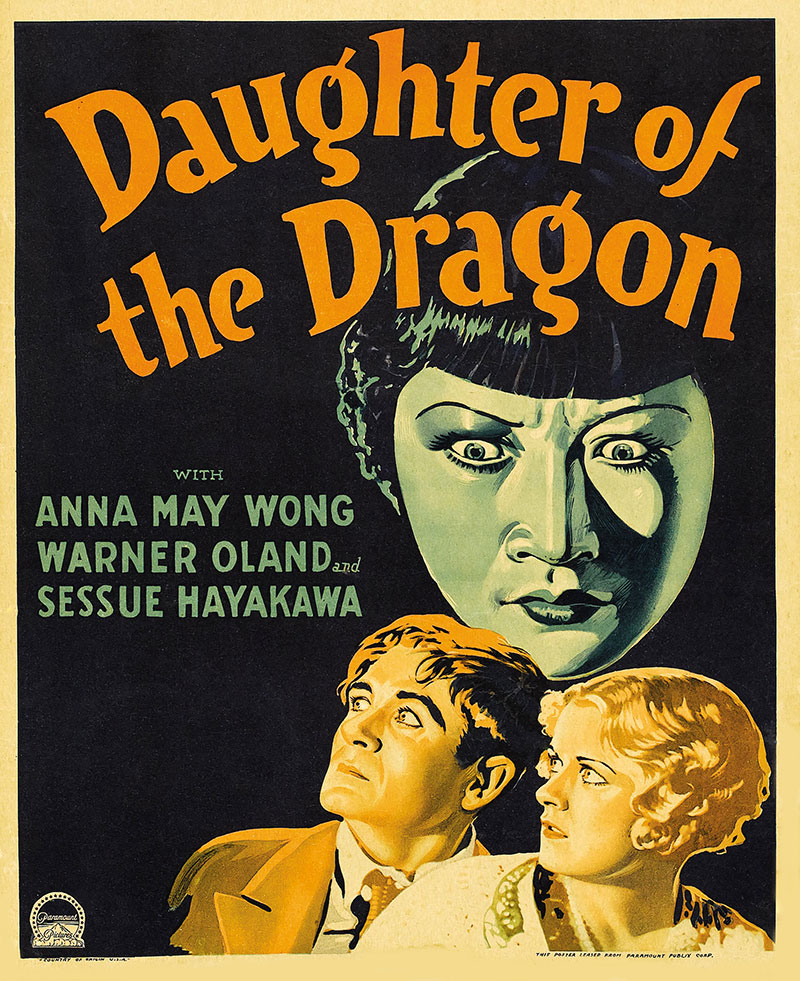
Anna May Wong (1905 – 1961)
-Daughter of the Dragon (1931)
Ling Moy, the daughter of the villain Fu Manchu, promises to assassinate Ronald Petrie, the son of her father’s nemesis, to avenge her family for his death. But when Ling Moy appears in Ronald’s life, she falls in love with him, which puts her in a difficult spot between her family loyalty and responsibility and her own feelings. Unable to achieve the murder, she is pressured by her father’s loyalists to fulfill her vow. She ultimately betrays Ronald, revealing her identity and attempting to torture him and his fiancée. In a climactic rescue led by the detective Ah Kee, who himself is in love with her, Ling Moy is fatally shot by Ah Kee as she tries to kill Ronald.
Anna May Wong accepted the role of Ling Moy in Daughter of the Dragon with a heavy heart. She was an artist trapped in an impossible system: to remain visible in Hollywood, she had to play the very stereotypes she fought against. She knew Ling Moy was another “Dragon Lady,” a role that reduced her heritage to a cliche of exotic danger. Yet, within those constraints, she made a calculated choice. She took the part because the studio dangled a rare and precious opportunity—a chance to later work with a visionary director who saw her true talent. She therefore put all her talent into Ling Moy to gradually challenge the stereotype rather than reinforce it. She gave the audience an actual feeling of Ling Moy’s struggle, heartbreak, and divided belief, inspiring viewers to see a woman struggling with her fate rather than just a villain. Her performance demonstrates her dedication and serves as a reminder that she was a strategic artist navigating a competitive industry while claiming her humanity on screen, rather than a helpless victim of Hollywood’s racism.
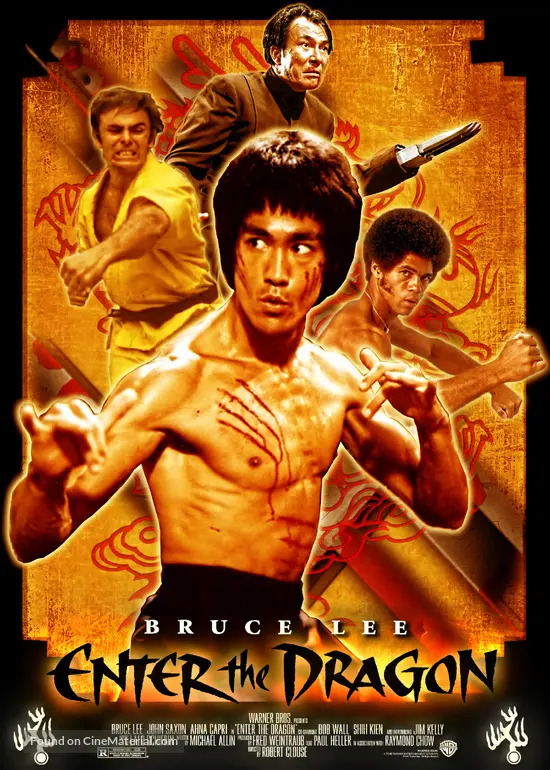
Bruce Lee (1940 – 1973)
-Enter the Dragon (1973)
In Enter the Dragon, Lee, who is a skilled martial artist recruited by the British intelligence to sneak into the private island of the mysterious criminal, lord Han, who is a former Shaolin monk who turned international criminal. Han hosts a martial arts tournament on his island. Attending the tournament provides a perfect chance for Lee to secretly investigate Han’s suspected involvement in crimes, including all kinds of crimes of drug peddling, prostitution, and human exploitation. While competing in the tournament, Lee finds out the brutal operations inside Han’s underground base. As Lee defeats more opponents through engaging in a series of high-stakes battles, he finally defeats Han by using both his mastery of martial arts and his wisdom.
Many people consider Enter the Dragon to be one of the most influential martial arts movies ever made, with the achievement of being acknowledged on the United States National Film Registry. Bruce Lee, as the film’s lead actor, became a legendary figure by shattering racial barriers. This revolutionary breakthrough led him becoming the first Asian male superstar, crafting an image of a handsome, intelligent hero in the Western world, which powerfully countered decades of racist stereotypes. His revolutionary martial arts choreography infused action cinema with unprecedented artistry and breathtaking visual spectacle, which inspired countless filmmakers and performers. Beyond his cinematic achievements, Bruce became a global symbol of Eastern strength and cultural pride. Ultimately, Enter the Dragon served as the primary catalyst for the worldwide martial arts development, introducing eastern culture to the West and permanently reshaping the view of global popular culture.
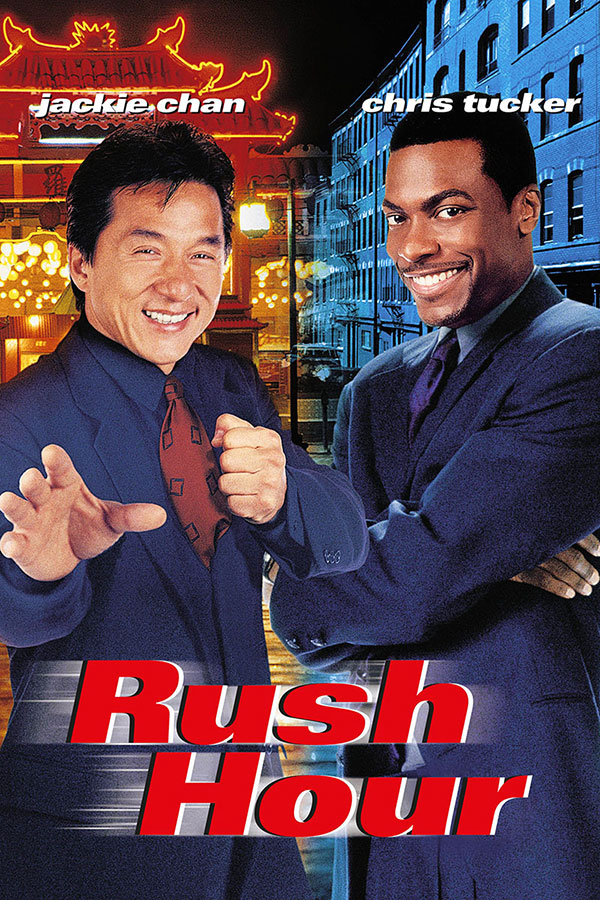
Jackie Chan (born 1954)
-Rush Hour series (1998–2007)
Rush Hour (1998) begins on Lee’s last case before Hong Kong returns to China. He raids a dock, intending to catch the boss of the criminals: Juntao. However, he only arrests his henchman, Sang, and recovers the stolen Chinese treasures. Two months later, in Los Angeles, the Chinese consul’s daughter, Soo Yung, is kidnapped by Sang. The consul calls Lee for help, but the FBI, due to an international incident, doesn’t trust the ability of lee, so they assign a loud and overconfident LAPD detective, Carter, to keep Lee away from the case. Carter drags Lee around the city to prevent him from reaching the consulate, but Lee slips away and successfully proves that he will be a crucial member of the team. While working together, they track down clues and discover that Juntao’s real identity is Thomas Griffin, a powerful British official, who demands ransom while threatening Soo Yung with a bomb vest at a big Chinese art gala. Team effort operated well between the three: Carter rescues Yung, Johnson removes the bomb, and Lee chases Griffin, who falls to his death. The consul thanks them by sending the detectives on vacation to Hong Kong.
Rush Hour was a turning point for Jackie Chan and for all Asian actors/actresses in Hollywood. For the first time in a major U.S. blockbuster, an Asian actor wasn’t a sidekick, villain, or stereotype— but was the hero, equal to his American co-star Chris Tucker. At the same time, Chan’s unique style of performance blended martial arts, comedy, and real stunts, which introduced Hong Kong–style action to mainstream American audiences. The film’s success proved that a Chinese actor could carry a Hollywood franchise, broadening the way for more Asian stars to enter the Hollywood film industry. The presence of this film also reshaped the buddy-cop genre by pairing two characters from completely different cultures and letting both actors and their characters shine. Jackie Chan became a worldwide celebrity due to his brilliant portrayal as a Kung Fu Comedian, which also encouraged Hollywood to include more diverse characters and roles in action movies.
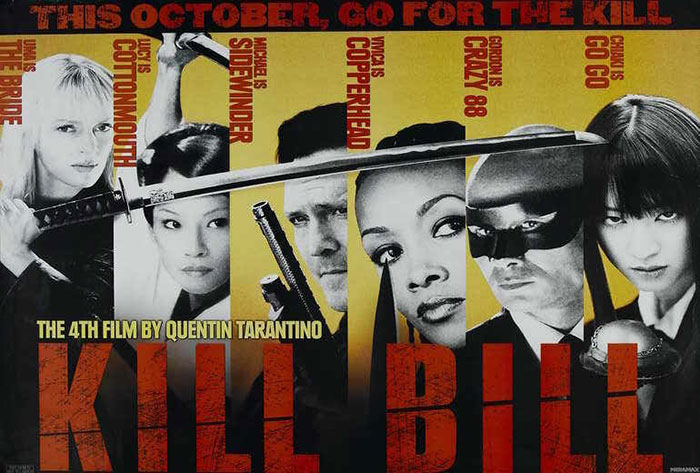
Lucy Liu (born 1968)
-Kill Bill: Vol. 1 (2003)
The film opens with a brutal, shocking scene: The Bride (played by Uma Thurman) lies beaten on the floor in her wedding dress, surrounded by the carnage of her murdered friends. As she tries to breathe, Bill gently wipes her face—then shoots her in the head, leaving her for dead. It’s cold, quiet, and terrifying, and it sets up her entire mission for revenge. By the end of Volume 1, The Bride fights her way through the Tokyo underworld and faces O-Ren Ishii (Lucy Liu) in a snowy garden. The two fighters clash in a beautiful, deadly sword fight. The Bride wins, but the film ends with a twist: Bill reveals that her child—the one she thought she lost—is alive.
Lucy Liu’s role as O-Ren Ishii was a breakthrough because it placed an Asian woman at the center of a major Hollywood action film. Liu’s beauty is defined by her almond-shaped eyes, high cheekbones, and playful freckles—an Eastern aesthetic that contrasts vividly with her radiant smile. This creates a mysterious feeling, capturing both her own and her character’s inherent stubbornness, and leaving audiences with a sense of untamed vitality, creating one of Tarantino’s most iconic villains. Liu’s performance helped normalize Asian women as leading figures in action cinema, not just stereotypical side characters. Her blend of calm authority and fierce combat presence made the Tokyo sequence legendary. By bring and depicting the depth of her character, Liu proved that Asian actresses could command the screen in visually ambitious Hollywood blockbusters that proving gentleness and strength can coexist within the soul of an Eastern woman, rather than weakness or a singular conception in early 2000s action cinema.